
Expert guide to selecting the right dumpster size for home cleanouts, renovations, and construction projects in San Francisco County.
Summary:
Choosing the wrong dumpster size costs you money and creates headaches. Too small means multiple trips or overflow fees. Too large means paying for space you don’t need. This guide walks you through assessing your waste volume, comparing dumpster sizes, and selecting the perfect container for your San Francisco County project. You’ll get practical checklists and real-world examples to make the right choice the first time.
Table of contents
Understanding Dumpster Sizes and Capacity
10-Yard Dumpsters: Perfect for Small Projects
20-Yard Dumpsters: The Sweet Spot for Most Projects
How to Calculate Your Project's Waste Volume
Room-by-Room Waste Estimation Guide
Weight Considerations and Material Density
Making the Right Choice for Your San Francisco Project
You’re staring at a pile of renovation debris or planning a major cleanout, and the question hits you: what size dumpster do I actually need? Get it wrong, and you’ll either pay for space you don’t use or scramble for a second container when you run out of room. Kitchen remodels alone can generate 20-30 cubic yards of debris, while bathroom projects typically produce 6-8 cubic yards. The key is matching your project’s specific waste volume to the right container size—and in San Francisco County, that also means understanding permit requirements and space constraints. Let’s break down exactly how to assess your needs and choose the perfect dumpster size.
Understanding Dumpster Sizes and Capacity
A 10-yard dumpster holds about 4 pickup truck loads of material, while larger containers scale up proportionally. Think of dumpster sizes in terms of volume, not just the number—each size serves different project types.
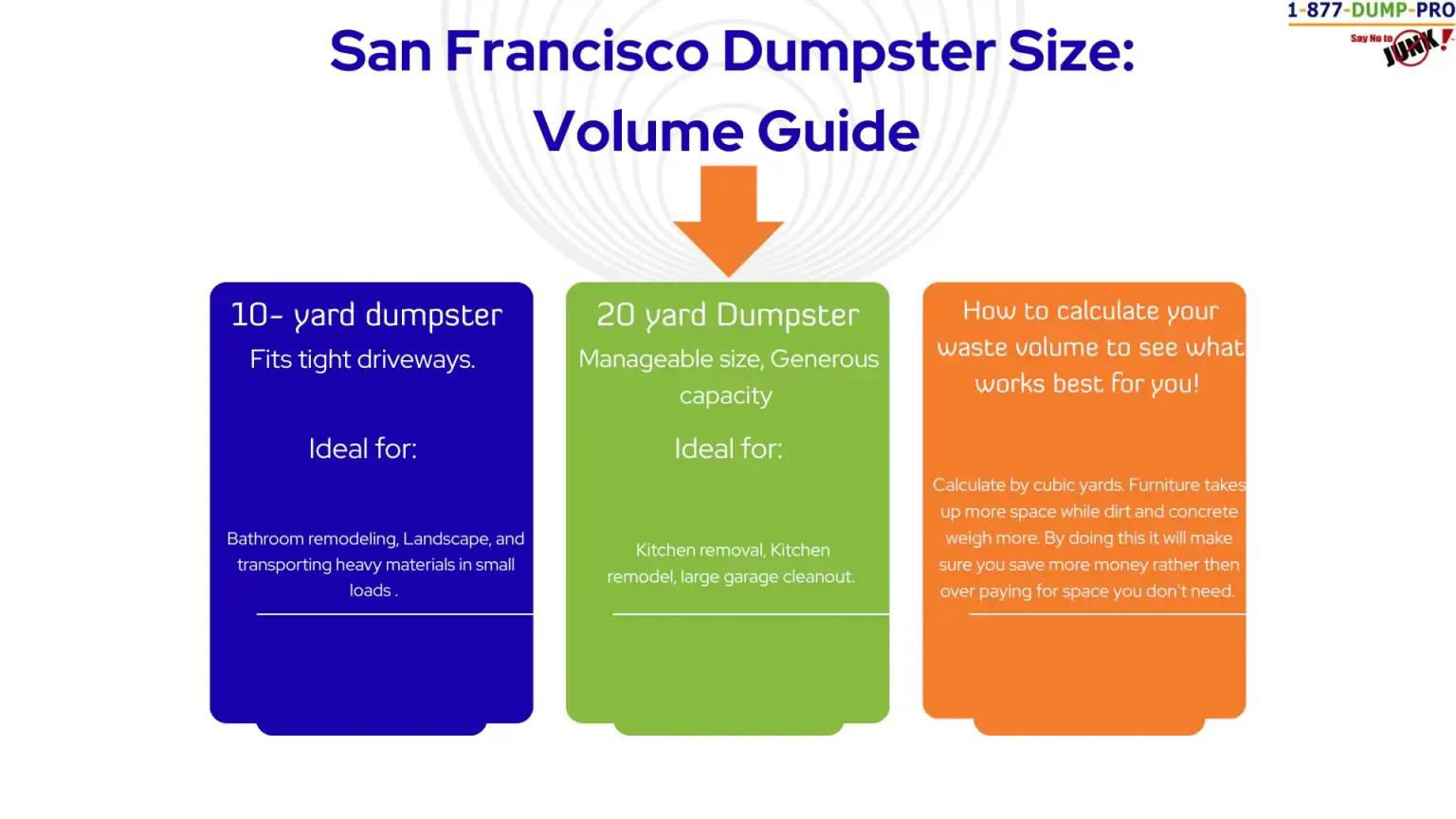
The smallest option, a 10-yard dumpster, fits easily in tight driveways and works perfectly for concrete, dirt, and light renovation waste. A 20-yard container balances manageable size with generous capacity, making it excellent for kitchen remodels and large garage cleanouts. For bigger jobs, 30-yard dumpsters handle larger home renovations and construction projects, accommodating deck removals and roofing jobs with ease.
10-Yard Dumpsters: Perfect for Small Projects
You’ll typically use a 10-yard dumpster for bathroom remodels, landscaping, and transporting heavy materials in small loads—like roofing or concrete removal projects. This size prevents you from exceeding weight limits, which is crucial when dealing with dense materials.
The compact footprint makes 10-yard containers ideal for San Francisco’s tight urban spaces. They’re perfect for bathroom remodels, small garage cleanouts, and minor landscaping projects, fitting easily in tight city driveways and holding approximately 3-4 pickup truck loads of debris.
But here’s what many people miss: heavy materials like concrete, shingles, or dirt should go in a 10-yard dumpster to stay within weight limits. Even though larger containers have more space, they can’t legally be transported if you exceed the weight capacity. Mixed construction debris weighs approximately 350 pounds per cubic yard, while concrete reaches 4,000 pounds per cubic yard.
For concrete removal, foundation work, or roofing tear-offs, the 10-yard size gives you the perfect balance of capacity and weight compliance. You can fill it completely without worrying about overage fees or pickup delays. Weight limits require operators to transport heavy materials in smaller quantities, so renting a 10-yard dumpster for heavy debris ensures safe transport without exceeding limits.
20-Yard Dumpsters: The Sweet Spot for Most Projects
You’ll typically use a 10-yard dumpster for bathroom remodels, landscaping, and transporting heavy materials in small loads—like roofing or concrete removal projects. This size prevents you from exceeding weight limits, which is crucial when dealing with dense materials.
The compact footprint makes 10-yard containers ideal for San Francisco’s tight urban spaces. They’re perfect for bathroom remodels, small garage cleanouts, and minor landscaping projects, fitting easily in tight city driveways and holding approximately 3-4 pickup truck loads of debris.
But here’s what many people miss: heavy materials like concrete, shingles, or dirt should go in a 10-yard dumpster to stay within weight limits. Even though larger containers have more space, they can’t legally be transported if you exceed the weight capacity. Mixed construction debris weighs approximately 350 pounds per cubic yard, while concrete reaches 4,000 pounds per cubic yard.
For concrete removal, foundation work, or roofing tear-offs, the 10-yard size gives you the perfect balance of capacity and weight compliance. You can fill it completely without worrying about overage fees or pickup delays. Weight limits require operators to transport heavy materials in smaller quantities, so renting a 10-yard dumpster for heavy debris ensures safe transport without exceeding limits.
How to Calculate Your Project's Waste Volume
Estimating waste volume is essential, with one cubic yard roughly equivalent to the size of a standard kitchen oven. But that’s just the starting point—different materials and project types create vastly different amounts of debris.
Residential demolition calculations involve smaller-scale projects, with kitchen remodels producing approximately 20-30 cubic yards of debris and bathroom renovations generating around 10-15 cubic yards of waste . Use these benchmarks as your baseline, then adjust based on your specific situation.
The biggest mistake people make is underestimating volume. Bulky items like furniture may take up more space, while heavy materials like concrete and dirt will weigh more, often requiring special considerations.
Room-by-Room Waste Estimation Guide
Different rooms generate predictable amounts of waste, and understanding these patterns helps you size your dumpster accurately. Kitchen renovations generate 2-3 cubic yards per linear foot of cabinetry plus 3-4 cubic yards per 40 square feet of granite countertops, while bathroom projects typically produce 6-8 cubic yards of mixed debris including fixtures, tile, and drywall.
For whole-house projects, the numbers add up quickly. Single-family homes generate 4-6 pounds of waste per square foot of finished space, with material waste percentages averaging 10-15% for lumber, 12-20% for drywall, and 5-15% for flooring depending on project complexity.
Here’s a practical approach: walk through each room and list what’s coming out. Old cabinets, appliances, flooring, drywall, fixtures—everything adds up. A standard single-family home build generates between 30 to 40 cubic yards of residential building debris, which helps contractors order the right dumpster size and budget for disposal costs from the start.
Don’t forget about the “hidden” waste. Demolition always uncovers unexpected materials—old insulation, extra framing, outdated wiring or plumbing. Add a 20% buffer to your initial estimate to account for these surprises. Square footage is the biggest influencer, but the number of stories also matters, with two-story homes generating about 20% more waste than single-story homes due to extra framing materials and interior finishes.
Weight Considerations and Material Density
Volume isn’t your only concern—weight limits can catch you off guard and result in expensive overage fees. Each dumpster has weight limitations that vary by provider and material type, with a 10-yard dumpster filled with concrete potentially exceeding its weight limit before reaching volume capacity.
Mixed construction debris weighs approximately 350 pounds per cubic yard while concrete reaches 4,000 pounds per cubic yard, and understanding these density differences prevents costly overweight fees and ensures proper container selection. This is especially important in San Francisco, where many older homes contain heavy materials like plaster walls and hardwood floors.
The solution is matching material type to container size. All temporary dumpsters work well for lightweight debris, but heavy materials like concrete, shingles, or dirt should go in a 10-yard dumpster to stay within weight limits—bigger dumpsters hold more by volume but all have weight limits, so for heavy loads, choose a smaller size and order multiple bins as needed.
Roofing projects illustrate this perfectly: asphalt shingles weigh 250-400 pounds per square (100 sq ft) and require 15-20 yard containers for most residential tear-offs, while metal roofing and slate materials are significantly heavier and may need multiple smaller containers to avoid exceeding weight limits. Plan your material disposal strategy before the work begins, not after you’ve filled a container beyond its weight capacity.
Making the Right Choice for Your San Francisco Project
Choosing the right dumpster size comes down to honest assessment of your project scope, understanding material weights, and accounting for San Francisco’s unique urban constraints. A 30-yard dumpster is the safest choice for most home remodeling projects, with sides tall enough to accommodate larger debris and availability at most rental companies.
Remember the key factors: project type determines base volume, material density affects weight limits, and your property’s space constraints influence what sizes will actually fit. Consider the space available for placing the dumpster, as a smaller dumpster might be more practical for residential areas with limited driveway or yard space, while larger dumpsters require more room for delivery and pickup.
When in doubt, consult with local experts who understand San Francisco County’s specific requirements and challenges. We help you navigate sizing decisions, permit requirements, and placement logistics to ensure your project runs smoothly from start to finish.


